Insights
From Bridge to Shore
The Career Opportunities Deck Officers Might Never Think to Look For
By Joe Davies, Founder of WorkAshore
5 min read
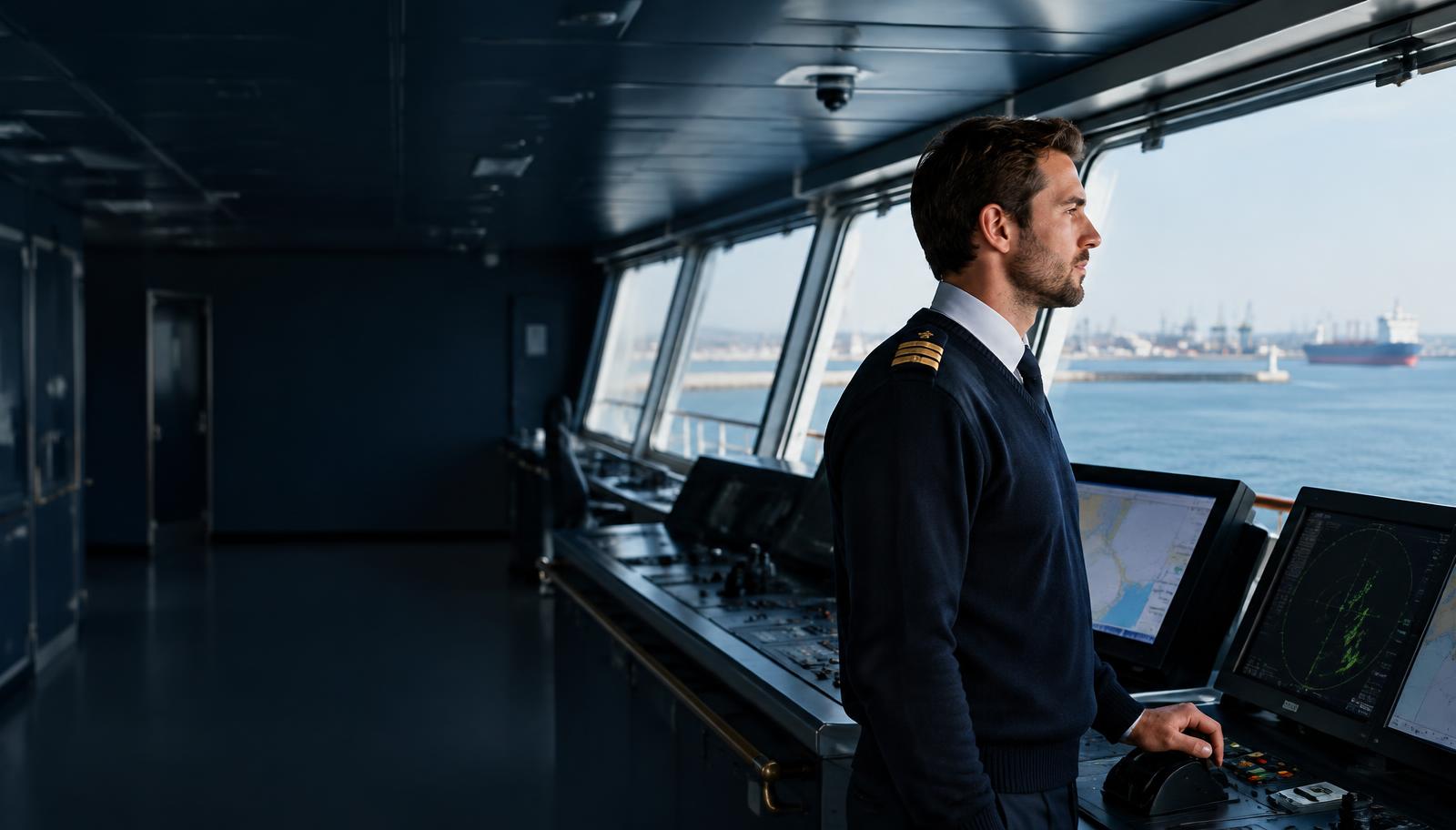
Ports, pilotage and marine superintendents are familiar routes ashore. But what about the opportunities that don't usually appear on those lists?
What if a software company wanted your experience?
Search for shore-based jobs for Deck Officers and you'll probably find the usual suspects: port operations, marine surveyors, pilots and fleet management.
They're all worth exploring. But they aren't the only possibilities.
Take the technology industry.
Maritime software company OneOcean has advertised a Solutions Consultant role (opens in a new tab) seeking strong maritime experience, with seagoing experience among the backgrounds listed.
Why would a software company want a former seafarer?
Think about it.
Someone needs to understand the challenges facing ships and their crews, explain how technology might solve them, and help customers make practical use of that technology.
Who better to understand some of those challenges than someone who's actually experienced them?
Of course, knowing how a ship operates doesn't automatically make someone a software consultant. The advertisement also sought experience in customer demonstrations, commercial discussions and solution development.
But here's the interesting part.
The maritime experience isn't something to work around. It's something the employer actively values.
Or perhaps an insurance company?
Marine insurance probably isn't the first industry that springs to mind when planning a career ashore.
Yet P&I clubs need people who understand maritime operations, incidents and risk.
NorthStandard, for example, has advertised a Loss Prevention Executive position (opens in a new tab) explicitly requiring an experienced Deck Officer. The advertised responsibilities included advising on operational risks, supporting surveys, producing safety guidance and helping shipowners prevent incidents.
Its recruitment material even identified people taking their first steps ashore as potential candidates.
And NorthStandard isn't alone. The UK P&I Club describes its loss prevention team (opens in a new tab) as including former senior mariners and engineers.
Why does that matter?
Because understanding how something can go wrong at sea is particularly valuable when you're helping others prevent it.
There are additional capabilities to develop, of course. Communicating with clients, delivering presentations, producing reports and understanding the insurance environment all matter.
But the starting point is clear: some employers are actively looking for the experience developed at sea.
What other opportunities are hiding in plain sight?
These examples share something important.
Neither starts with a traditional maritime rank.
One starts with a business that needs to understand its customers. The other starts with an organisation that needs practical expertise to manage risk.
That raises a useful question.
Instead of only searching for jobs that match your rank, what organisations might benefit from what you've experienced?
Perhaps a technology provider serving an industry you know well. A consultancy tackling operational problems. A company managing complex equipment, maintenance or safety-critical activities.
Not every connection will lead to a suitable job. Some will require substantial new knowledge, qualifications or experience.
But discovering those possibilities is the interesting part.
How do you start looking differently?
Try approaching your next career search from the employer's perspective.
Look at companies supplying technology, specialist services, insurance or operational support to industries you understand.
Read what those businesses actually do. Look at the problems they solve and the people they employ.
Then ask yourself:
Where could my experience help that organisation? What would I need to learn? And does the career interest me enough to pursue it?
Those questions might lead somewhere unexpected.
It's also the thinking behind WorkAshore. Rather than simply matching maritime ranks to familiar job titles, we're developing a way to explore careers through your experience, interests and the opportunities worth investigating.
A perspective from someone who's made the move
When I left sea as a Second Officer, I initially explored the traditional maritime and safety-related opportunities.
My eventual career took me into technology and asset management, an industry I knew very little about at the time. I've since worked across several sectors, including defence.
That wasn't a career I could have predicted from my rank or qualifications alone.
It's one reason I believe we should encourage Deck Officers to explore beyond the obvious opportunities.
Not every door will open, and some will require additional skills, qualifications or experience. But we shouldn't assume those doors are closed simply because someone's previous career was at sea.
That's part of the thinking behind WorkAshore: helping maritime professionals understand where their experience could take them next.
Your rank tells part of your story. Your experience tells the rest.
Sources and further reading
- OneOcean — Solutions Consultant role (opens in a new tab). The full requirements were available in the search-indexed employer page when checked; direct retrieval returned incomplete text.
- NorthStandard — Loss Prevention Executive (opens in a new tab).
- UK P&I Club — Loss Prevention (opens in a new tab).
- Spinnaker — Legal and Insurance Claims Careers (opens in a new tab). Further reading on the sector; the guide was available through search-indexed content, while direct retrieval was rate-limited when checked.
Job advertisements are historical examples used to illustrate career possibilities, not live vacancies. Their publication and closing dates have not been established here. A page remaining accessible does not confirm that a position is open. Requirements vary, and these examples do not mean every Deck Officer is eligible. Employer and recruiter references do not imply affiliation with or endorsement of WorkAshore.